







 Ikerd Law Firm
 Disclaimer: This guide provides general information for educational purposes only and does not constitute legal advice. Louisiana laws and procedures can change, and every situation is unique. For specific legal questions or if you believe your rights have been violated, contact a licensed Louisiana attorney immediately.
Getting pulled over does not have to be a nightmare. Understanding your rights during a traffic stop is not just legal trivia. It is essential knowledge that can protect you from unnecessary consequences and potential rights violations.
Why This Matters:
- Wrong moves can escalate a simple traffic stop
- Your rights exist whether you know them or not
- Knowledge protects you from overreach
- Proper behavior can minimize consequences
In Louisiana, you are protected by both state traffic laws and fundamental U.S. constitutional rights. But knowing these rights means nothing if you do not understand how to exercise them properly.
The difference between a routine interaction and a situation that spirals out of control often comes down to your demeanor and knowledge. Stay calm, be respectful, and know exactly what you are required to do and what you are not.
When Can Police Stop You in Louisiana?
Ever wonder if that cop actually had a good reason to pull you over? You are not alone.
Reasonable Suspicion Requirement
Police cannot just pull you over because they feel like it or because you “look suspicious.” Louisiana law requires officers to have reasonable suspicion that you have committed a traffic violation or crime. This means they need specific, observable facts. Not just a hunch or gut feeling.
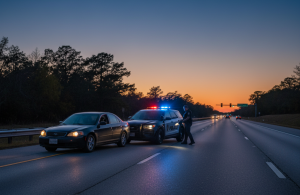
Valid Reasons for Traffic Stops:
- Speeding or driving under the speed limit
- Running a red light or stop sign
- Broken taillight, headlight, or turn signal
- Swerving between lanes or erratic driving
- Expired license plates or registration
- Using a cell phone while driving (hands-on use)
- Failing to use turn signals
- Following too closely
The Bottom Line: The officer must be able to articulate exactly why they stopped you. “You looked suspicious” or “I had a feeling” is not enough under Louisiana law.
If you believe the stop was invalid, do not argue on the roadside. Document everything and challenge it in court with an attorney’s help.
DUI/DWI Checkpoints
Wondering if those roadblocks are even legal? They are, but with strict conditions. Louisiana allows sobriety checkpoints, but they must follow specific guidelines.
These roadblocks are legal only when they:
- Follow a predetermined, neutral pattern for stopping vehicles
- Are clearly marked and publicized in advance
- Have proper supervisory oversight on-site
- Minimize delay and inconvenience to drivers
- Serve a legitimate public safety purpose
What to Expect at a Checkpoint: You will be asked for your license and registration. Officers look for signs of impairment like alcohol odor, slurred speech, bloodshot eyes, or coordination issues.
Remember, you are not required to answer questions beyond providing identification, but refusing basic cooperation at a legal checkpoint can escalate the situation.
Your Rights During the Stop
Right to Remain Silent
You do not only have to provide basic identification during a traffic stop. Beyond showing your driver’s license, registration, and proof of insurance, you are not legally required to answer questions.
Common Questions You Don’t Have to Answer:
- “Do you know why I stopped you?”
- “Where are you coming from?”
- “Where are you headed?”
- “Have you been drinking tonight?”
- “What’s in your car?”
How to Exercise This Right Politely: “Officer, I’m exercising my right to remain silent. I would prefer not to answer questions beyond providing my required documents.”
Key Insight: Do not lie or make up stories. If you choose to speak, be truthful, but remember that anything you say can be used against you later, even seemingly innocent comments.
Right to Refuse a Vehicle Search Without a Warrant
This might be the most important right you did not know you had.
Police generally need either your consent, a warrant, or probable cause to search your vehicle. If an officer asks to search your car, you can clearly but respectfully say: “Officer, I do not consent to any searches.”
Exceptions Where Officers Can Search:
- Probable cause: Officers see, smell, or have other evidence of illegal activity
- Plain view: Contraband visible from outside the vehicle
- Incident to arrest: If you are arrested, police can search areas within your immediate reach, which may include your vehicle, depending on your location in relation to the vehicle
- Inventory search: If your car is impounded, it may be inventoried or searched
Even if you refuse consent, do not physically resist if officers proceed with a search. That is a battle for the courtroom, not the roadside. Physical resistance can lead to additional serious charges.
Right to Record the Encounter
Your smartphone might be your best witness. Louisiana law allows you to record police interactions in public spaces, including during traffic stops. However, do this safely and strategically.
Safe Recording Practices:
- Keep your hands visible at all times
- Don’t interfere with the officer’s duties
- Announce that you’re recording for safety purposes
- Store recordings securely or livestream them if possible
- Don’t make sudden movements to grab your phone
Pro Tip: Some apps automatically back up recordings to cloud storage, protecting evidence even if your phone is confiscated.
Right Against Unreasonable Seizures
How long is too long for a traffic stop?
A traffic stop is technically a “seizure” under the Fourth Amendment, but it must be reasonable in scope and duration. Officers cannot detain you indefinitely. The stop should last only as long as necessary to address the original reason for the stop.
Reasonable Duration Guidelines:
- Simple traffic citation: 15-30 minutes on average
- More complex issues: Longer detention may be justified
- Waiting for drug dogs: Generally requires additional reasonable suspicion
If you feel you are being detained unreasonably long, you can politely ask: “Officer, am I free to leave?” This clarifies whether you are still being detained and creates a record of the interaction’s length.
Your Responsibilities During a Stop
Rights come with responsibilities. Here’s what you absolutely must do.
Provide Driver’s License, Registration, and Proof of Insurance
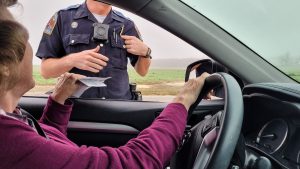 Louisiana law requires you to carry and present these documents when requested during any traffic stop:
Required Documents:
- Valid Louisiana driver’s license (or out-of-state license if visiting)
- Current vehicle registration
- Proof of insurance coverage
Special Note: In Louisiana, you can show proof of insurance on your smartphone. You do not need a physical card. But make sure your phone is easily accessible and the app works without internet if needed.
What If You Do Not Have These Documents? Missing documents can result in additional citations and complications. Always keep these updated and accessible in your vehicle.
Stay Inside Your Vehicle Unless Instructed Otherwise
This is about safety, yours and the officer’s.
Do not get out of your car unless the officer specifically asks you to. Keep your hands visible on the steering wheel, move slowly and deliberately, and announce any movements: “Officer, I’m reaching for my registration in the glove compartment.”
If Asked to Step Out: You must comply immediately. Officers can order drivers and passengers out of vehicles during traffic stops for safety reasons.
Do so slowly and safely:
- Turn off the engine
- Keep your hands visible
- Lock your car if possible
- Do not reach for anything without announcing it first
Remain Polite and Non-Confrontational
Your attitude can make or break the encounter.
Being respectful does not mean you are admitting guilt. It is about de-escalating the situation and protecting yourself from additional charges. Even if you believe the stop is unfair, the roadside is not the place to argue your case.
Behaviors That Help:
- Use “sir” or “ma’am” when addressing officers
- Keep your voice calm and level
- Avoid sudden movements
- Don not argue about the validity of the stop
Behaviors That Hurt:
- Arguing or becoming defensive
- Making accusations of racism or bias
- Using profanity or aggressive language
- Refusing to follow lawful orders
Common Officer Requests and How to Respond
Not all requests are actually requirements. Know the difference.
Consent to Search
When officers ask to search your vehicle, they are asking for permission because they likely do not have probable cause to search without it. Consenting voluntarily gives up your Fourth Amendment protections.
The Safe Response: “Officer, I do not consent to any searches.”
Why This Matters:
- Consent eliminates your ability to challenge the search later
- You cannot take back consent once given
- Even if you have nothing to hide, searches can lead to misunderstandings
Field Sobriety Tests
You are not legally required to perform field sobriety tests (walking a straight line, standing on one foot, following a pen with your eyes), but refusing can be used as evidence against you in court.
Louisiana’s implied consent law applies to chemical tests (breathalyzer, blood, or urine tests). By driving in Louisiana, you have already consented to these tests if lawfully arrested for DWI.
Refusing Chemical Test Results in Automatic License Suspension:
- First offense: 1 year
- Second offense: 2 years
- Third offense: 2+ years (penalties escalate further)
These penalties apply even if you are never convicted of DWI.
Field sobriety tests are generally voluntary with consequences. Chemical tests after arrest are mandatory, with severe penalties for refusal.
That one-year suspension for refusing a breath test? It kicks in immediately, regardless of whether you ultimately beat the DWI charge in court. The administrative penalty is separate from any criminal conviction.
If You Are Arrested
Ask for an Attorney Immediately
The moment you are arrested, clearly state, “I want to speak with an attorney.” This invokes your Miranda rights and should stop all questioning until you have legal representation.
- Be clear and unambiguous in your request
- Repeat it if officers continue questioning
- Do not qualify your request (“Maybe I should talk to a lawyer”)
- Do not think you can talk your way out (you cannot)
Remain Silent After Arrest
Post-arrest silence is absolutely critical for your defense.
Do not discuss your case with anyone except your attorney. Not other inmates, not family members on recorded jail phones, and certainly not police officers who might try to restart questioning.
Remember:
- Jail phones are recorded
- Cellmates might be informants
- Anything you say can be used against you
- Officers may lie about evidence to get you to talk
Special Considerations in Louisiana
Louisiana has some unique laws you need to know about.
Open Container Laws
Louisiana prohibits open containers of alcohol in vehicles, but there are some exceptions that might surprise you.
General Rule: No open alcoholic beverages in the passenger area of any vehicle on public roads.
Important Exception: Passengers in commercial vehicles like limousines, party buses, or motor homes may legally consume alcohol if the driver is separated by a partition and the vehicle is properly licensed.
What Counts as “Open”:
- Any container with a broken seal
- Cans or bottles that have been opened
- Mixed drinks in cups
Even if you are not drinking, having an open container can result in fines and complicate a traffic stop.
Firearms in Vehicles
In July 2024, Louisiana made it legal to carry a gun concealed without a permit, sometimes called “constitutional carry,” which changed the rules for moving vehicles.
- Any law-abiding adult 18+ can carry in their vehicle
- No requirement to keep firearms unloaded
- No requirement to store ammunition separately
- Your car is essentially treated as an extension of your home
You must immediately inform any officer who approaches you or your vehicle that you have a firearm present.
How to Handle It Right:
- Stay calm and keep your hands visible
- Clearly state: “Officer, I want you to know I have a legally carried firearm in the vehicle.”
- Let the officer control the situation completely
- Don’t reach for anything unless instructed
Key Insights:
- Constitutional carry doesn’t mean “anything goes.” You still must be legally eligible to possess firearms
- The duty to inform officers applies whether you have a permit or not
- Private property owners can still prohibit firearms on their premises
After the Traffic Stop.
Document the Encounter
As soon as you are safely able, write down everything you remember while it is still fresh:
- Officer’s name and badge number
- Police department/agency
- Time, date, and exact location
- Weather and lighting conditions
- Reason given for the stop
- All questions asked and your responses
- Any searches conducted (and whether you consented)
- Witnesses present
- Photos of any damage or the scene
- Your physical and emotional state
Tip: Use your phone’s voice memo feature to record details immediately if writing is not safe or practical.
Filing a Complaint
If you believe your rights were violated, you have several options for filing complaints:
Where to File:
- The officer’s local police department
- Louisiana State Police (for state troopers)
- Louisiana Attorney General’s Civil Rights Division
- Local district attorney’s office
- FBI Civil Rights Division (for federal civil rights violations)
Important: File complaints promptly while details are fresh, and keep copies of all documentation. Consider consulting with an attorney before filing to understand the potential consequences and benefits.
Follow-Up Legal Action
Sometimes a complaint is not enough. If you suffered damages from a rights violation, you might have grounds for a civil lawsuit.
Common scenarios include:
- Illegal searches that led to false arrests
- Excessive force during the stop
- Discrimination based on race, gender, or other protected characteristics
- Violations that resulted in job loss or other damages
Protecting Your Rights on Louisiana Roads
If you believe your rights were violated during a traffic stop, do not try to handle it alone. Contact the Ikerd Law Firm by calling (337) 366-8994.
Staying informed and prepared is not about avoiding responsibility. It is about ensuring your constitutional rights are respected every time you drive on Louisiana’s roads.
In a state where traffic stops can happen to anyone, being prepared is not just smart. It is essential.
Frequently Asked Questions
Can passengers leave the vehicle during a Louisiana traffic stop?
Passengers may ask if they are free to leave but should wait for officer permission. Police can order passengers to remain in the vehicle for officer safety during the stop. Passengers have the right to remain silent and refuse consent to searches under the Fourth Amendment.
What happens if you refuse a field sobriety test in Louisiana?
You can refuse field sobriety tests in Louisiana, but this may provide officers with additional suspicion for arrest. Refusing chemical tests after arrest triggers implied consent consequences under La. R.S. 32:661, including automatic license suspension. Chemical test refusal differs from roadside sobriety exercises.
Does Louisiana law require you to inform police about a firearm in your vehicle?
Yes. Under La. R.S. 40:1379.3(I)(2), Louisiana is a duty-to-inform state. Both permit holders and permitless carriers must immediately notify any officer who approaches them in an official capacity that they are carrying a concealed handgun. Keep your hands visible, calmly state you have a firearm, and follow the officer’s instructions for temporary disarmament.
Can police search your phone during a traffic stop without a warrant?
Police cannot search your cell phone during a traffic stop without a warrant, consent, or exigent circumstances. The U.S. Supreme Court ruled in Riley v. California that phones contain highly personal information. If officers request access to your phone, you can politely decline without providing your passcode.
What should you do if an unmarked vehicle tries to pull you over?
Slow down, turn on hazard lights, and proceed to a well-lit public area before stopping. You can call 911 to verify the vehicle is law enforcement. Louisiana law allows reasonable delay to reach a safe location. Once stopped, ask the plain-clothes officer for identification before providing documents.
How long can police detain you during a traffic stop in Louisiana?
Under La. Code Crim. Proc. Art. 215.1(D), officers cannot detain you longer than reasonably necessary to complete the stop and issue a citation. Extended detention requires reasonable suspicion of additional criminal activity. If the purpose of the stop is complete, ask if you are free to leave.
Can you be arrested for refusing to sign a traffic ticket in Louisiana?
Signing a traffic citation in Louisiana is not an admission of guilt but a promise to appear in court or pay the fine. Refusing to sign may result in arrest because the signature serves as your release mechanism. The officer may take you into custody if you refuse to sign.
What constitutes probable cause for a vehicle search during a traffic stop?
Probable cause exists when officers have reasonable belief that your vehicle contains evidence of a crime. Examples include observing illegal items in plain view, smelling marijuana, or reliable information from witnesses. Probable cause allows warrantless searches under the automobile exception to the Fourth Amendment warrant requirement.
Can you receive a ticket for pulling over too slowly in Louisiana?
Failing to yield to emergency vehicles can result in citations under La. R.S. 32:125. You should pull over promptly when safe to do so. However, officers generally understand reasonable delays to find safe stopping locations. Driving excessively far before stopping may raise suspicion of fleeing or concealing evidence.
What are your rights if police request to search your trunk?
You have the right to refuse trunk searches unless officers have probable cause, a warrant, or valid consent. Clearly state you do not consent to the search. If officers proceed anyway, do not physically resist. Your refusal can be raised later if evidence is challenged under illegal search and seizure protections.