








Proving Diffuse Axonal Injury After an 18-Wheeler Crash in Louisiana: The Tests, Experts, and Evidence That Win Cases
 Ikerd Law Firm
 Legal Disclaimer: This article provides general legal and medical information about diffuse axonal injury claims arising from truck accidents in Louisiana. It does not constitute legal or medical advice. Every case is unique. If you or a loved one has suffered a brain injury in a truck crash, consult with a qualified Louisiana personal injury attorney and your healthcare provider.
A fully loaded 18-wheeler can weigh 80,000 pounds. When that mass collides with a passenger vehicle at highway speed, the forces involved are catastrophic.
One of the most devastating injuries that can result is diffuse axonal injury, or DAI, a form of traumatic brain injury where the acceleration and deceleration forces are so violent that they physically shear the nerve fibers deep inside the brain.
The damage is widespread, often invisible on standard emergency room scans, and can leave a person permanently disabled.
Proving DAI in a Louisiana courtroom requires advanced medical imaging, specialized expert testimony, and a legal team that understands how to connect the physics of a truck crash to the documented damage inside a plaintiff’s brain. This guide walks through how that evidence is built, step by step.
If you or someone you love suffered a brain injury in an 18-wheeler accident, the Ikerd Law Firm can help. Call us at (337) 366-8994 for a free consultation.
What Is Diffuse Axonal Injury (DAI) and How Does It Occur?
Diffuse axonal injury is a severe form of traumatic brain injury caused by rapid rotational or translational head movements that place shear strain on the brain’s white matter tracts.
According to the NIH’s StatPearls resource on DAI, angular acceleration during high-speed deceleration is the principal inciting force. When the forces act on the brain faster than its tissue can absorb them, axons (the long nerve fibers that carry signals between brain regions) stretch beyond their tolerance and tear.
This damage concentrates in predictable areas: the gray-white matter junctions of the cerebral cortex, the corpus callosum (the bridge between the brain’s two hemispheres), and the brainstem.
These are the locations where tissues of different densities meet, creating points of maximum shear stress during rapid acceleration and deceleration. The Brain Injury Association of America explains that DAI occurs because the unmoving brain lags behind the movement of the skull, causing nerve structures to tear and disrupting the brain’s communication and chemical processes.
Why Are 18-Wheeler Crashes Likely to Cause DAI?
An 80,000-pound commercial truck striking a 3,500-pound sedan generates forces that are orders of magnitude greater than a typical passenger-vehicle collision.
The mass disparity means the smaller vehicle (and everything inside it) undergoes extreme, sudden changes in velocity. The occupant’s body stops when it hits the seatbelt or airbag, but the brain continues moving inside the skull, rotating and deforming until it strikes the interior walls of the cranium.
DAI is a consistent feature of transportation-related injuries, particularly those involving high-speed, long-duration deceleration.
Truck collisions produce exactly the type of rotational and angular acceleration forces that the medical literature identifies as the primary mechanism for shearing axons.
The longer the deceleration pulse lasts (as it does in a high-mass collision), the more damage it inflicts on the brain’s white matter.
What Are the Symptoms of Diffuse Axonal Injury?
The symptoms depend on the severity and location of the axonal damage. In severe cases, DAI causes immediate loss of consciousness that can progress to coma.
Even in less severe presentations, DAI can cause profound cognitive and behavioral changes, including:
- Persistent confusion and disorientation
- Problems with memory, attention, and processing speed
- Difficulty with executive functions like planning and decision-making
- Personality and mood changes, including irritability, depression, and emotional dysregulation
- Chronic fatigue and sleep disturbances
- Impaired coordination and balance
Many of these symptoms may not be immediately apparent. Families often notice the changes before the patient does, describing the person as “not the same” after the crash.
How Is DAI Diagnosed? And Why Is Initial CT Often Misleading?
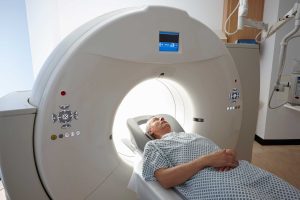 A CT scan is the standard first test done in the emergency room. It is good at spotting skull fractures, large hemorrhages, and brain swelling. CT scans do not detect nonhemorrhagic and small axonal lesions well. These lesions are common in DAI. They can overlook the very injuries that define diffuse axonal injury.
That’s why advanced imaging is important. MRI using specialized sequences like susceptibility-weighted imaging, FLAIR, and gradient echo is far better than CT for spotting microhemorrhages and white matter lesions related to DAI.
Diffusion Tensor Imaging (DTI) takes this further by mapping the structural integrity of white matter tracts. A 2023 study in the World Journal of Clinical Cases found that more than 90% of courts that considered motions to exclude DTI evidence rejected those efforts — reflecting strong judicial acceptance of DTI when supported by a treating clinician.
Neuropsychological testing helps complete the diagnosis by measuring deficits in memory, attention, processing speed, and executive function. These tests translate imaging findings into real-world cognitive issues that a jury can grasp without difficulty.
What Is the Typical Prognosis and Recovery Time for DAI?
The prognosis for DAI varies based on injury severity.
The NIH classifies DAI into three grades:
- Grade I: Microscopic axonal damage in the cerebral white matter, primarily affecting the hemispheres and corpus callosum, with possible involvement of the brainstem and cerebellum.
- Grade II: Adds focal lesions in the corpus callosum.
- Grade III: Includes more lesions in the brainstem and has the worst prognosis.
Patients with severe DAI who enter a coma may stay unconscious for long periods. Some may shift to a vegetative state or a state of minimal consciousness.
Those who regain consciousness often need months to years of rehab and may not return to their pre-injury function.
Patients with less severe DAI often experience persistent cognitive issues, personality changes, and a reduced capacity to work or live independently. The CDC describes moderate to severe TBI as a “lifelong condition” that can impact all aspects of a person’s life.
What Evidence Is Needed to Prove DAI in a Louisiana Court?
- Emergency room records documenting the mechanism of injury, Glasgow Coma Scale scores, loss of consciousness, confusion, and initial imaging. Even a “normal” CT matters because it establishes a baseline and allows experts to explain why the CT missed the DAI.
- Advanced imaging (MRI and DTI) that reveals the white matter damage that CT could not detect. DTI is particularly powerful because it provides visual evidence of disrupted axonal tracts that a jury can see and understand.
- Neuropsychological testing that documents the cognitive deficits in measurable, objective terms and compares them to the patient’s estimated pre-injury baseline.
- Expert testimony from neurologists, neuroradiologists, neuropsychologists, and biomechanical engineers who explain the diagnosis, interpret the imaging, present the functional deficits, and connect the crash forces to the brain injury. Under the Louisiana Code of Evidence Article 702 and the Daubert framework, each expert’s methodology must be reliable and based on sufficient facts.
- Life-impact evidence, including testimony from family members, coworkers, and the plaintiff about how daily life has changed since the injury. Before-and-after comparisons are powerful: the person who ran a business, coached youth sports, or managed a household versus the person who now cannot follow a conversation or remember to take medication.
What Is the Statute of Limitations for DAI Truck Accident Claims in Louisiana?
Louisiana uses the term “prescription” rather than “statute of limitations.” For truck accident injuries occurring after July 1, 2024, the prescriptive period is two years from the date of injury (La. C.C. Art. 3493.1). Injuries sustained before that date remain subject to the former one-year prescriptive period under the now-repealed La. C.C. Art. 3492.
Even at two years, Louisiana’s deadline is among the shortest in the country. And with DAI cases specifically, the complexity of assembling the medical evidence, securing expert witnesses, and investigating the trucking company’s records (driver logs, maintenance history, and black box data) means that time is never on your side.
Filing early preserves your rights and gives your legal team the runway it needs to build the strongest possible case.
How Does Louisiana’s Comparative Negligence Law Affect DAI Settlements?
Under Louisiana’s comparative fault rule (La. C.C. Art. 2323), if the injured person was partially at fault for the accident, their recovery is reduced by their percentage of fault. If a jury finds the plaintiff 20% at fault and the truck driver 80% at fault, the plaintiff recovers 80% of the total damages.
As of January 1, 2026, Louisiana follows a modified comparative fault system (La. C.C. Art. 2323, as amended by Act 15).
If you are found 51% or more at fault, you recover nothing. If your fault is less than 51%, your damages are reduced by your percentage of blame.
Can You Recover Damages If DAI Symptoms Appear Days or Weeks After the Crash?
Yes. DAI symptoms frequently have a delayed onset.
While severe cases may cause immediate coma, less severe presentations can take days or even weeks to fully manifest. This is consistent with the medical understanding of secondary axonal degeneration, where the initial mechanical stretching of axons triggers a molecular cascade that progressively worsens the damage over time.
Louisiana law does not require that your symptoms appear at the moment of impact. What matters is that the medical evidence connects the symptoms to the crash.
Emergency room records, follow-up treatment notes, imaging studies, and expert testimony can all establish that the brain injury originated from the truck accident, even if the full clinical picture did not emerge for weeks. Under La. C.C. Art. 2315, you can recover for all damages caused by the negligent act, including medical expenses, lost wages and earning capacity, pain and suffering, mental anguish, and loss of enjoyment of life.
There is no cap on general damages in standard Louisiana personal injury cases.
Your Family Deserves Answers. We Can Help You Get Them.
Diffuse axonal injury from a truck crash can turn a life upside down in an instant. The medical reality is complex, the insurance company will fight hard against your claim, and the evidence required to prove DAI in court is specialized and technical. You should not have to figure this out on your own.
Call the Ikerd Law Firm today at (337) 366-8994 for a free consultation.