

Call for Consultation (337) 366-8994
Call for Consultation (337) 366-8994



Disclaimer: This article is for informational purposes only and does not constitute legal advice. Reading this content does not create an attorney-client relationship. Laws vary by state and change frequently, and information that applies in one jurisdiction may not apply in another. Consult a licensed attorney in your state for advice specific to your situation.
Attorney Advertising. The information on this website is for general informational purposes only. Nothing on this site should be taken as legal advice for any individual case or situation.
When a radiologist fails to report a critical finding, a patient may not learn about a tumor, a blood clot, or a brain bleed until the condition has progressed to a point where the outcome is dramatically worse.
In Louisiana, a missed or misread scan result can give rise to a medical malpractice claim under the Louisiana Medical Malpractice Act when the failure falls below the standard of care and causes injury.
 Imaging errors take several forms, and understanding the distinction matters for how a case is built.
A perceptual error occurs when the radiologist reads the imaging study but fails to see an abnormality that is present and visible.
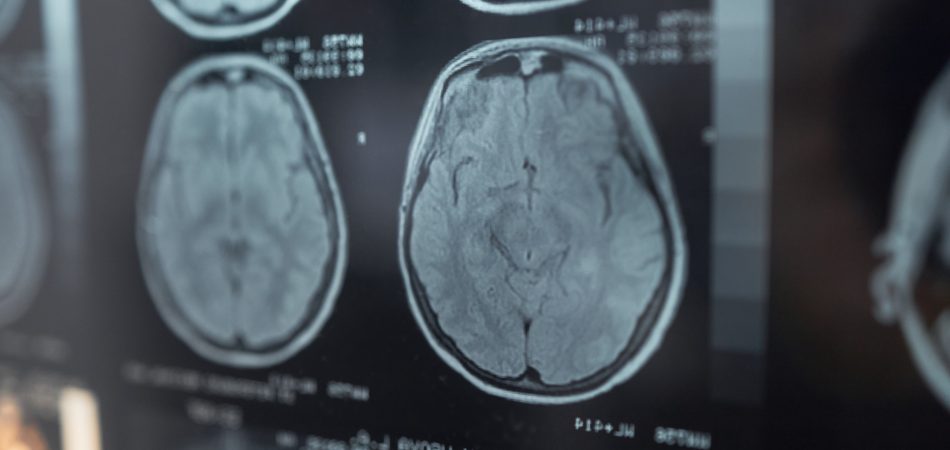
A lung nodule that sits at the edge of a plain chest X-ray, a hairline fracture that appears faint on the image, or a small area of brain abnormality on an MRI slice are findings that a reasonably attentive radiologist reviewing the study should have identified. When the missed finding is visible in retrospect but was not reported, that is a perceptual failure.
An interpretive error occurs when the radiologist perceives a finding but incorrectly characterizes its significance.
A nodule that is reported as likely benign and recommended for recheck in twelve months, when its characteristics on imaging warrant immediate biopsy, is an example of an interpretive error. The radiologist saw something, then reached the wrong conclusion about what it meant.
Peer-reviewed radiology literature estimates the clinical error rate in radiology practice at approximately four percent (Degnan AJ et al., Academic Radiology, 2019; PMID: 30559033).
At scale, that rate translates to tens of millions of interpretive errors globally each year. Not all of them cause clinically significant harm. The ones that delay cancer diagnosis, miss a pulmonary embolism, or fail to identify a brain hemorrhage can be devastating.
Common missed findings that lead to Louisiana malpractice claims include:
In each of these scenarios, the critical question is not just whether the radiologist missed the finding. It is whether a reasonably competent radiologist reviewing the same study would have reported it and whether the failure to report it caused a delay in treatment that harmed the patient.
Additionally, there are times a radiologist correctly interprets the image and finds a critical finding that is of immediate medical concern to the patient; however, the radiologist fails to timely alert medical providers to the critical finding. This failure can, in turn, delay emergent treatment of the critical condition.
Radiologists are required to meet the standard of care applicable to a reasonably competent radiologist in the same specialty under similar circumstances.
For both the practice of reading imaging studies and the communication of findings, the American College of Radiology sets the governing professional framework.
The ACR Practice Parameter for Communication of Diagnostic Imaging Findings, most recently revised in 2025, establishes three categories of findings that require nonroutine communication beyond routine reporting channels.
Critical or emergent findings, those requiring immediate clinical intervention, must be communicated directly to the treating physician or appropriate clinical personnel, not simply placed in the radiology report and awaited.
Discrepant findings, where a later radiologist determines that a prior read was incorrect, require direct communication to the treating team.
Significant unexpected findings, meaning pathology outside the scope of the ordered examination but clinically meaningful, also require direct notification under the ACR standard.
A radiologist who identifies a large lung mass on a study ordered for an unrelated purpose and routes that finding only through the normal report without directly contacting the ordering physician has not met the ACR communication standard. A radiologist who misses a pulmonary embolism that is visible on CT has not met the reading standard. In a Louisiana malpractice case, expert testimony from a qualified radiologist will address both the standard that applied and how the defendant’s conduct compared to it.
Have you or a family member been harmed by a missed or misread imaging result? The Ikerd Law Firm represents medical malpractice victims throughout Louisiana. Contact us to discuss your situation.
 One of the most important questions in a radiology malpractice case is when the prescriptive period begins to run. Louisiana R.S. § 9:5628(A) provides that a medical malpractice claim must be filed within one year from the date of the alleged act of malpractice or within one year from the date the patient discovered or should have discovered the malpractice, whichever is later. A three-year absolute limit runs from the date of the alleged negligent act, regardless of when discovery occurred.
In imaging error cases, this creates a specific issue. The “act” of malpractice is the negligent review of the imaging study, meaning the date the radiologist issued the deficient report. But many patients do not know a finding was missed until a subsequent physician raises it, sometimes months or years later.
Louisiana courts applying La. R.S. § 9:5628 has recognized that the one-year discovery window begins when the patient knew or should have known the malpractice occurred, not necessarily when the imaging was taken.
However, the three-year outside limit is measured from the date of the negligent read, not from the date of discovery. A patient who learns five years after a negligent radiology report that a finding was missed may have no available claim, regardless of when they found out.
Filing a complaint with the Medical Review Panel tolls (suspends) this prescriptive period for the duration of the panel process plus 90 days after dismissal.
Under Louisiana law, you generally have one year from the date you discovered the malpractice to file a claim. Deadlines vary based on your specific circumstances. Consult a Lafayette medical malpractice attorney immediately to protect your rights, since delays in these cases can permanently bar recovery.
Radiology malpractice claims in Louisiana are governed by the Louisiana Medical Malpractice Act, La. R.S. § 40:1231.1 et seq. Under La. R.S. § 40:1231.1(A)(13), “malpractice,” includes “any unintentional tort…based on health care or professional services rendered…by a health care provider to a patient.”
A radiologist’s deficient interpretation of an imaging study falls directly within that statutory definition.
Whether a claim is governed by the LMMA and must therefore go through the Medical Review Panel before suit is determined by applying the six-factor test from Coleman v. Deno, 813 So. 2d 303 (La. 2002).
Radiology malpractice claims clearly satisfy those factors: they are treatment-related, require expert medical testimony, involve assessment of the patient’s condition, and arise in the context of a physician-patient relationship within the scope of the hospital’s licensed activities.
Before a radiology malpractice lawsuit can be filed in a Louisiana court, the claim must first go through the Medical Review Panel process under La. R.S. § 40:1231.8(A)(1)(a).
The panel consists of three health care providers, typically physicians in the relevant specialty, and one attorney serving as panel chair.
The panel reviews submitted evidence: medical records, imaging studies, radiology reports, expert opinions, and any other relevant documentation.
It then issues an opinion on whether the standard of care was met or breached. That opinion is admissible at trial. It is not, however, a final determination, and a plaintiff can file suit regardless of the panel’s conclusion.
Filing a Medical Review Panel complaint suspends the prescriptive period under La. R.S. § 40:1231.8(A)(2)(a) from the date of filing until 90 days after panel dismissal. An experienced attorney handles the panel submission and uses it to build the record that will later support the courtroom case.
Louisiana’s Medical Malpractice Act caps total recoverable damages at $500,000 under La. R.S. § 40:1231.2(B)(1)(a), exclusive of past and future medical expenses and related needs. Individual qualified health care providers are capped at $100,000 in liability; amounts above that threshold are paid by the Louisiana Patient’s Compensation Fund.
The $500,000 cap covers the following types of damages: pain and suffering, emotional distress, lost wages, and lost earning capacity claims.
Past medical bills and past medical needs are outside the medical malpractice cap. Further, future medical care, meaning ongoing treatment, rehabilitation, medications, home nursing, and other care needs resulting from the delayed diagnosis, is uncapped.
In cases where a missed cancer diagnosis led to treatment requiring years of chemotherapy, surgery, or ongoing supportive care, or where a missed brain bleed resulted in permanent deficits requiring long-term care, the unlimited future medical provision is often the most significant avenue of recovery available.
A missed imaging finding that delays a life-changing diagnosis is a serious harm and, in many cases, a preventable one.
Call (337) 366-8994 for a free consultation.
Not every missed finding constitutes malpractice. The legal standard requires that a reasonably competent radiologist reviewing the same imaging study under similar conditions would have identified and reported the finding. An attorney with experience in Louisiana medical malpractice will review your records, consult with a qualified radiology expert, and assess whether the read fell below that standard and whether the failure caused you harm.
Under La. R.S. § 9:5628, you generally have one year from the date you discovered or should have discovered the missed finding to file a claim. An absolute three-year limit runs from the date of the negligent imaging read, regardless of when you learned about it. Filing a Medical Review Panel complaint suspends this period. Consult an attorney promptly, since this deadline cannot be recovered once missed.
The $500,000 cap under La. R.S. § 40:1231.2 covers general damages, like pain and suffering, and lost wages and lost earning capacity. Past and future medical bills and related needs are outside the cap. Future medical care includes care like chemotherapy, surgery, and ongoing treatment. In cancer cases with substantial future treatment needs, this distinction is critically important to understanding the total recovery available.
Yes, in almost all cases. La. R.S. § 40:1231.8 requires that a Medical Review Panel be completed before a malpractice suit can be filed in a Louisiana state court. Filing with the panel suspends the prescriptive period. The panel’s opinion is admissible at trial but does not bind the jury or prevent the case from proceeding.

 Ikerd Law Firm