

Call for Consultation (337) 366-8994
Call for Consultation (337) 366-8994


Legal Disclaimer: This article provides general legal information about FMCSA regulations and Louisiana personal injury law. It does not constitute legal advice and should not be relied upon as such. Every case is unique, and outcomes depend on specific facts and circumstances. If you have been injured in a truck accident, consult with a qualified Louisiana attorney to discuss your individual situation.
When an 18-wheeler slams into a family car, the trucking company’s PR team calls it a “tragic accident.” They want you to believe it was just bad luck, a momentary lapse, or maybe even your fault.
At the Ikerd Law Firm, we know better. In most catastrophic trucking cases, the wreck wasn’t an accident—it was the inevitable result of a choice.
Trucking companies are businesses. They make money when the wheels are turning, and they lose money when the truck is parked. This creates a deadly incentive to push drivers too hard, skip expensive maintenance, and hire unqualified drivers just to put a body in the seat.
To stop them, the federal government created the Federal Motor Carrier Safety Regulations (FMCSRs). These aren’t just suggestions; they are the law. When a trucking company violates these rules to boost their profits, and you get hurt, that is not just negligence. That is a betrayal of public safety.
This guide explains the specific rules they break, how they try to hide it, and how we catch them.
Most people think a truck wreck is just a bigger car wreck. It isn’t. Truck drivers are held to a higher professional standard. Here are the three most common federal rules they break to make an extra dollar.
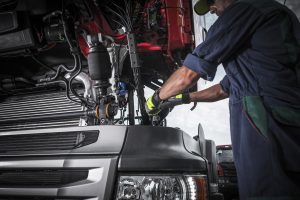 The Rule: Federal law strictly limits how many hours a driver can be behind the wheel (generally 11 hours driving after 10 consecutive hours off). This is to prevent fatigue, which is as dangerous as drunk driving.
The Cheat: Drivers are paid by the mile. To make a living, many feel forced to drive when they are exhausted. They might unplug their tracking devices or use “ghost co-drivers” (logging a fake passenger) to keep driving when they should be sleeping.
How We Catch Them: We don’t just look at the logbook (which can be faked). We pull the GPS data, toll booth receipts, and fuel card transactions. If the logbook says he was sleeping in Shreveport, but his fuel card shows he bought diesel in Dallas an hour later, we have proved he is a liar—and the company is liable because they did not properly vet their driver for truthfulness or looked the other way to encourage excessive driving.
The Rule: Drivers must perform a Pre-Trip Inspection before every shift. If the brakes are worn or a tire is bald, the truck must not move.
The Cheat: Fixing brakes costs money and time. Companies often pressure drivers to ignore “minor” issues to finish a delivery.
How We Catch Them: We hire forensic mechanics to inspect the wreckage immediately. We look for rust on the brake pads (proving they haven’t worked in months) or uneven tire wear that proves the alignment was ignored. If we find a mechanical failure that should have been caught in a pre-trip inspection, the company’s negligence is undeniable.
The Rule: Companies must test drivers before hiring them and randomly throughout the year.
The Cheat: With a massive driver shortage, some “bottom feeder” companies will hire drivers with a history of drug use or DUIs, hoping they don’t get caught.
How We Catch Them: We demand the Driver Qualification File (DQF). This secret file contains the driver’s entire history. We often find that the company knew the driver had a suspended license or a history of reckless driving but put him behind the wheel of an 80,000-pound battering ram anyway.
 This is the most critical warning I can give you: The evidence you need to win your case is self-destructing right now.
In a standard car wreck, the evidence is largely static—skid marks on the pavement, dents in the fender, and perhaps a police report. But in a catastrophic commercial trucking case, the most damning evidence is digital, and it is exclusively owned and controlled by the very trucking company that hurt you.
This creates a race against time that most victims lose before they even hire a lawyer.
Modern commercial trucks are equipped with an Electronic Control Module (ECM), commonly known as the “Black Box.” This device is not just a speedometer; it is a forensic recorder that captures the precise physics of the truck in the seconds leading up to and during a crash.
The ECM tells us what the engine was doing, but the Telematics System (often systems like Qualcomm, PeopleNet, or Omnitracs) tells us what the driver and company were doing.
This system is the text-messaging and GPS link between the driver in the cab and the dispatcher in the office.
The moment you hire us, we send a Spoliation Letter via certified mail to the trucking company, their insurance carrier, and the driver personally. This is not a polite request; it is a forceful legal demand that immediately freezes all evidence preservation protocols.
It explicitly puts them on notice: “If you delete the data, repair the truck, wipe the cell phone, or shred the logbooks after receiving this letter, a jury will be told you destroyed evidence to hide your guilt.”
If the trucking company knows they are liable, their next move is to claim they aren’t actually the employer.
The Defense: “He’s an Independent Contractor. He owns his own truck. We just leased him. Sue him, not us.”
They say this because the driver likely has a $1 million policy, but the trucking company has a $50 million policy. They want to protect their assets.
The Ikerd Law Strategy: We use the “Statutory Employer” doctrine. Under federal law, if a company leases a truck and displays their placard (logo) on the door, they are responsible for that truck as if they owned it. We pierce the corporate veil to find the real insurance policy, ensuring there is enough money to pay for your catastrophic injuries.
Often, the driver’s negligence in the crash is just the tip of the iceberg. The deeper liability lies in Negligent Hiring.
Trucking companies have a duty to hire only qualified, safe drivers. However, in their desperation to fill seats, they often ignore red flags.
Federal law (49 CFR Part 391) requires companies to maintain a DQF for every driver. When we subpoena this file, we look for:
If the company hired a driver they should have known was dangerous, the company is directly liable for negligent hiring, a separate and powerful cause of action that can lead to significantly higher damages.
 In Louisiana, the general rule is that we only get compensatory damages—money to pay for your bills, lost wages, and pain. We cannot usually ask for extra money just to “punish” the company, with one major exception.
If we can prove the driver was intoxicated or under the influence of drugs at the time of the crash (under La. C.C. Art. 2315.4), we can seek Punitive Damages. This is why immediate drug testing (post-accident testing) is mandated by federal law for serious crashes. If the company failed to test the driver within the required time window, we argue that they knew he would fail and engaged in a cover-up.
While “pattern and practice” evidence does not automatically trigger punitive damages in Louisiana (unlike some other states), it is the key to proving direct corporate negligence.
If we can show the trucking company had a pattern and practice of forcing drivers to violate safety rules (e.g., dispatch logs showing they assigned loads that were strictly impossible to deliver legally without speeding or skipping sleep, hired wholly unqualified drivers, etc.), we prove that the company itself was negligent, not just the driver. This locks the company into the lawsuit directly, prevents them from blaming a “rogue driver,” and maximizes the value of your compensatory claim by showing the jury the systemic disregard for your safety.
A truck wreck is not a DIY case. It’s not even a case you would want a typical car crash attorney to handle. It is a war against a corporation with unlimited resources and a team of lawyers whose only job is to deny your claim.
The “Rapid Response” Team: Within minutes of a catastrophic crash, the trucking company dispatches a “Rapid Response Team” of investigators and defense lawyers to the scene. Their job is to:
If you do not have your own team on the ground immediately, you are starting the race days behind.
At the Ikerd Law Firm, we know the federal regulations better than they do. We know how to read the logs, download the black boxes, and expose the safety violations they try to hide.
Chad Ikerd is a member of the American Truck Accident Attorney’s (ATAA) organization, which specifically focuses on improving the legal representation of truck wrecks among attorneys.
They broke the rules. You got hurt. Now, let’s make them pay.
Contact us today for a free forensic case review. We will stop the destruction of evidence and start building your case immediately.
Federal Motor Carrier Safety Administration (FMCSA) regulations, part of the Federal Motor Carrier Safety Regulations (FMCSR), set standards for driver hours, vehicle maintenance, and qualifications. Violations of these rules often establish negligence per se, meaning the breach itself proves fault without further debate.
Negligence per se occurs when a truck driver or company violates FMCSA rules designed to protect the public, like exceeding driving hours or skipping inspections. This legal doctrine shifts the burden, presuming negligence unless refuted, strengthening claims for compensation.
Key evidence includes electronic logging device (ELD) data for hours-of-service breaches, maintenance logs, event data recorders (EDRs), and dispatch records. These federal-mandated records help prove unsafe practices caused the accident.
Liability extends beyond the driver to trucking companies for poor hiring, inadequate training, or unsafe dispatching, plus cargo loaders if relevant. Multiple parties can share fault based on FMCSR non-compliance.
Victims may recover medical bills, lost wages, pain and suffering, and sometimes punitive damages if violations show recklessness. Proving FMCSA breaches supports higher settlements by demonstrating clear negligence.


 Ikerd Law Firm