

Call for Consultation (337) 366-8994
Call for Consultation (337) 366-8994


Legal Disclaimer: This article provides general legal and medical information about traumatic brain injury claims in Louisiana. It does not constitute legal or medical advice and should not be relied upon as such. Every case is unique, and outcomes depend on specific facts and circumstances. If you or a loved one has suffered a brain injury due to someone else’s negligence, consult with a qualified Louisiana personal injury attorney and your healthcare provider to discuss your individual situation.
You were in a wreck. Out of nowhere, someone slammed into the back of your car. You were wearing your seatbelt, so you did not have significant physical injuries. You were just dazed for a few minutes.
You did not want to make a big deal about it and told the EMS you did not need to go to the hospital in the ambulance. You go home. You turn out all the lights because you feel a headache coming on. You fall asleep.
When you wake up, you realize you still have a persistent headache and light sensitivity. You cannot bear the kids yelling in the house. Only later do you realize that when your car was hit, your head whipped forward at impact and snapped back.
What you are feeling is not normal. You may have suffered a mild traumatic brain injury. You need to seek immediate medical attention.
A mild traumatic brain injury can cause symptoms that last months, years, or even a lifetime. The Centers for Disease Control and Prevention (CDC) confirms that people with mild TBI can experience ongoing problems with concentration, memory, headaches, and emotional regulation long after the initial injury. The National Institute of Neurological Disorders and Stroke (NINDS) has linked even a single TBI to an increased risk of neurodegenerative conditions later in life.
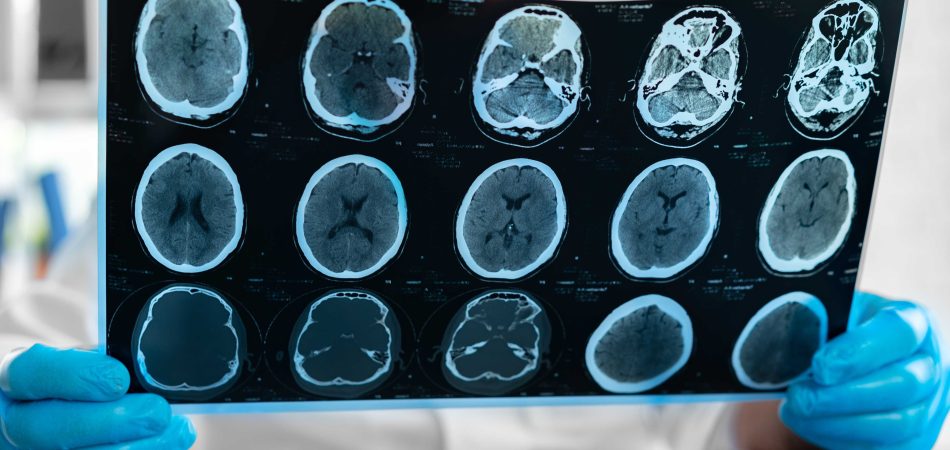
But knowing that a brain injury is real and proving it in a Louisiana courtroom are two very different challenges. Standard emergency room imaging often comes back “normal” after a mild TBI. That does not mean there is no injury.
It means the tools used in the ER were not designed to detect the kind of microscopic white matter damage that mild TBI causes. Proving your case requires the right tests and experts and a legal team that understands how to connect the medical evidence to the crash that changed your life.
If you or someone you love is struggling with symptoms after a head injury, the Ikerd Law Firm can help you understand your legal options. Call us at (337) 366-8994 or visit ikerdlaw.com for a free consultation. We will review your case and help you figure out the path forward.
 Traumatic brain injury is diagnosed based on a combination of clinical findings, not a single test. The most widely used initial assessment is the Glasgow Coma Scale (GCS), which scores a patient’s eye opening, verbal response, and motor response on a scale of 3 to 15. A score of 13 to 15 is classified as mild TBI, 9 to 12 as moderate, and 8 or below as severe.
Beyond the GCS, clinicians evaluate whether the patient experienced any loss of consciousness; any period of amnesia surrounding the event (called post-traumatic amnesia); any alteration in mental state at the time of injury (confusion, disorientation, feeling dazed); and the presence of neurological deficits.
The CDC updated its clinical guidance in 2023 through the American College of Emergency Physicians, emphasizing that a mild TBI diagnosis can be made even when CT imaging is normal if the clinical criteria are met.
The absence of a visible injury on a scan does not mean the absence of a brain injury. The diagnostic criteria are clinical, and the imaging is just one piece of the picture.
A severe TBI is generally defined by a Glasgow Coma Scale score of 8 or below, a loss of consciousness lasting more than 24 hours, or post-traumatic amnesia lasting more than 7 days. The NINDS notes that severe TBI can lead to extended periods of unconsciousness or coma and may result in permanent physical, cognitive, and behavioral impairments.
However, the classification of “mild” versus “severe” refers to the initial presentation, not the long-term outcome. A person who scores 14 on the GCS in the emergency room can still develop debilitating cognitive deficits that last for years.
Research published in the National Library of Medicine confirms that a meaningful subset of mild TBI patients experience persistent symptoms, including chronic headaches, concentration problems, memory loss, and emotional dysregulation.
Insurance companies and defense attorneys often exploit the word “mild” to minimize these injuries. The medical reality is far more complicated.
Proving a TBI in court requires building a layered body of evidence that connects the accident to documented brain dysfunction. No single test or record does this alone. Instead, your personal injury attorney assembles four categories of evidence that reinforce each other.
The foundation of every TBI case starts in the hours immediately after the accident. Emergency room records document the mechanism of injury (how the crash or impact happened), the patient’s GCS score, whether there was any loss of consciousness or confusion, pupil reactivity, and initial imaging results.
Even when the CT scan is negative, other details matter enormously. Notations about disorientation, amnesia, nausea, vomiting, or the patient “not seeming like themselves” all support the diagnosis.
Paramedic and first responder reports are also critical because they capture the patient’s condition in the minutes after impact, before the brain has had time to compensate.
If you or a loved one was recently in an accident, do not skip the emergency room. Symptoms of mild TBI often do not appear for hours or days. Getting evaluated immediately helps diagnose and treat this serious problem, and it creates a medical record that ties the injury to the event.
Because mild TBI frequently damages these tracts through diffuse axonal injury, DTI can reveal structural disruptions that standard MRI and CT miss entirely.
A peer-reviewed study in the World Journal of Clinical Cases found that over 90% of courts considering challenges to DTI evidence have allowed it to be admitted in personal injury trials when supported by a clinician.
 Neuropsychological testing is a comprehensive evaluation performed by a licensed neuropsychologist that measures how well the brain is functioning across multiple domains: memory, attention, processing speed, executive function, language, and emotional regulation.
A full evaluation can take four to eight hours and involves dozens of standardized, validated tests. The results create a detailed cognitive profile that can be compared to population norms and to the patient’s estimated pre-injury baseline.
When a person who held a demanding professional role can no longer remember a grocery list or follow a multi-step conversation, the neuropsychological data puts that decline into measurable, objective terms a jury can understand.
The CDC specifically recommends neuropsychological or neurocognitive testing as part of the evaluation process for mild TBI.
In a courtroom, these results provide the bridge between the imaging evidence and the real-world impact on the plaintiff’s daily life.
Medical evidence does not speak for itself in court. It needs qualified experts to explain it.
In a Louisiana TBI case, your legal team may call on:
Under Louisiana law, expert testimony must meet the standards of Louisiana Code of Evidence Article 702 and the framework established by Daubert v. Merrell Dow Pharmaceuticals.
The methodology must be reliable, relevant, and based on sufficient facts and data.
A strong TBI case layers these experts so that each one addresses a different piece of the puzzle, and together they create a narrative the jury can follow from the moment of impact to the symptoms the plaintiff lives with today.
In Louisiana, as in all states, the standard of proof in a civil personal injury case is a preponderance of the evidence. This means you must show that it is more likely than not (greater than 50%) that the defendant’s negligence caused your injury. This is a significantly lower bar than the “beyond a reasonable doubt” standard used in criminal cases.
For a TBI claim, meeting this standard requires connecting the dots between the accident, the medical evidence of brain injury, and the impact on the plaintiff’s life. Each piece of evidence described above contributes to that showing.
Emergency records establish that a traumatic event occurred and the patient exhibited signs of brain injury. Imaging demonstrates structural changes in the brain. Neuropsychological testing documents functional deficits. And expert testimony explains to the jury why all of that evidence, taken together, proves the defendant’s negligence more likely than not caused the plaintiff’s brain injury and resulting losses.
Under La. C. C. art. 2315, a plaintiff who meets this burden can recover for medical expenses (past and future), lost wages and earning capacity, mental anguish, loss of enjoyment of life, pain and suffering damages in Louisiana. There is no cap on general damages in standard Louisiana personal injury cases.
If you are living with the aftermath of a brain injury that someone else caused, you do not have to navigate this alone. The medical system may have missed it. The insurance company may be dismissing it. But the right evidence, the right experts, and the right legal team can make the invisible visible.
At the Ikerd Law Firm, we understand the science behind traumatic brain injuries and the legal strategy required to prove them in a Louisiana courtroom. We work with neurologists, neuropsychologists, and imaging specialists to build cases that hold up under scrutiny.
Call us today at (337) 366-8994 for a free consultation.
Yes. A normal CT does not rule out a mild TBI. Advanced imaging like MRI and DTI, combined with neuropsychological testing and expert testimony, can provide the evidence needed to prove your injury.
Two years from the date of injury for accidents occurring after July 1, 2024 (La. C.C. Art. 3493.1). One year for injuries before that date. Medical malpractice TBI claims retain a one-year deadline.
TBI cases require specific medical knowledge, access to the right experts, and experience presenting complex neurological evidence to a jury. An attorney experienced in brain injury litigation can make a significant difference in the outcome.


 Ikerd Law Firm